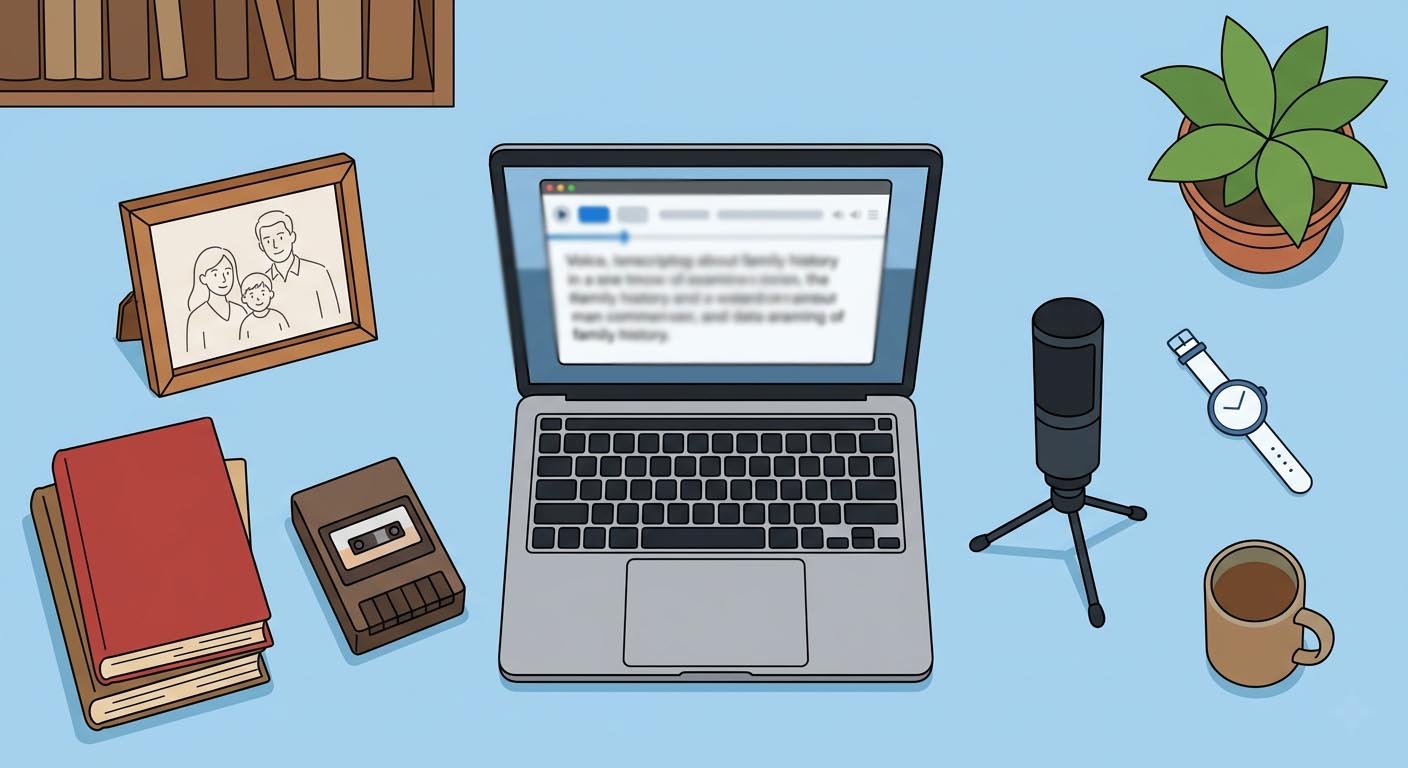
Some of the most meaningful stories in a family are spoken casually rather than written down. A grandmother recalls childhood holidays while cooking dinner. A parent shares memories of a first job during a long drive. Someone records a quick voice memo about an old neighborhood before the details fade. These moments carry emotion, humor, and personal history. Yet spoken memories are fragile if they stay trapped in audio files.
Turning those voice recordings into written narratives gives them a new life. Written stories are easier to organize, revisit, and pass on to future generations. A simple recording captured on a phone can become a polished memory archive that children, grandchildren, and relatives can read decades later. Tools that help people convert speech to text make the process much easier. A few minutes of speaking can quickly transform into the first draft of a story.
This approach blends technology with tradition. Families have always shared stories orally. Modern transcription tools simply help preserve those spoken moments before they disappear. The result is a powerful way to turn everyday conversations into lasting written history.
Quick Story Snapshot
- Voice memos capture memories quickly before details fade.
- Transcription turns spoken stories into editable text.
- Written stories are easier to organize, search, and share.
- Families can build archives that future generations can read.
- Simple edits turn rough transcripts into engaging narratives.
Why Voice Memos Capture Memories So Naturally
Speaking often feels easier than writing. Many people struggle to sit down and compose a long memory on a blank page. The pressure of writing can interrupt the flow of a story. Voice memos remove that barrier. A person simply speaks and lets the story unfold naturally.
Emotion often surfaces more clearly through spoken words. Tone, pauses, and laughter add depth to a memory. Someone describing a childhood summer may pause to recall the smell of the lake or the sound of crickets at night. Those natural expressions bring life to the story before it is even written.
Many storytellers already rely on spoken narratives as the starting point for writing. Capturing memories through audio works especially well for families documenting personal histories. Ideas appear quickly and organically, much like the storytelling approaches described in storytelling frameworks for beginners, where thoughts are allowed to develop freely before being refined into structured narratives.
How Spoken Memories Become Written Narratives
Once a voice memo is recorded, the next step is turning the spoken words into a readable draft. Transcription technology makes that process fast and accessible. Instead of manually typing each sentence, software analyzes speech and converts it into text.
Modern speech recognition tools identify patterns in spoken language. The system detects words, punctuation, and sentence breaks. The result is a transcript that mirrors the original conversation while making it editable and searchable. This process saves hours of manual transcription and allows families to focus on shaping the story itself.
After transcription, the text becomes a flexible storytelling resource. Writers can rearrange sections, clarify details, and add context. A casual spoken memory can grow into a polished narrative suitable for sharing with relatives or publishing in a digital archive.
Building a Story From a Simple Recording
A voice memo rarely arrives as a perfectly structured story. People speak in fragments. They jump between memories. Some details repeat while others appear suddenly. That is normal. Editing helps shape those raw memories into a clear narrative.
Writers usually begin by identifying the core theme of the memory. A recording might focus on a childhood home, a family tradition, or a meaningful life event. Once that theme becomes clear, the transcript can be reorganized around it.
Many families enjoy pairing transcripts with photos or memorabilia. That combination creates a layered storytelling experience similar to approaches described in multimedia storytelling projects, where different media forms work together to strengthen the emotional impact of a narrative.
Five Steps That Turn Voice Notes Into Stories
Transforming spoken memories into written narratives becomes easier when the process follows a clear structure. Each step builds on the previous one and gradually shapes the story into its final form.
1. Record memories immediately
Capture voice memos as soon as a story appears. Fresh memories carry vivid details that may fade later. Even short recordings can preserve important moments.
2. Transcribe the recording
Use transcription software to convert the audio into text. This step creates the first written draft without requiring manual typing.
3. Identify the story’s central theme
Read through the transcript and locate the emotional core of the memory. That theme guides the structure of the final story.
4. Edit and organize the narrative
Rearrange sentences so the story flows logically. Remove repetition and clarify confusing sections while keeping the original voice intact.
5. Add context and reflection
Expand the story with details about time, location, and personal meaning. These additions help readers connect with the memory.
Examples of Family Stories That Begin as Voice Memos
Voice recordings can capture almost any kind of personal story. Some memories appear during quiet reflection. Others emerge during ordinary conversations. Recording these moments creates opportunities for storytelling that might otherwise disappear.
- Grandparents sharing childhood memories with younger relatives.
- Parents describing how they met or how they built their first home.
- Travel stories recorded during family trips.
- Personal reflections about important life transitions.
- Descriptions of cultural traditions or family recipes.
These recordings provide the raw material for written family histories. Over time, dozens of small recordings can evolve into a large collection of meaningful stories.
Tools That Help Preserve Spoken Memories
Technology now plays an important role in preserving personal narratives. Recording apps make capturing memories simple. Transcription tools convert audio into written text. Cloud storage platforms keep those stories safe for future generations.
| Tool Type | Purpose | Benefit for Storytelling |
|---|---|---|
| Voice Recording Apps | Capture spoken memories instantly | Preserves spontaneous stories |
| Transcription Tools | Convert audio into written drafts | Creates searchable narratives |
| Photo Archives | Store images related to memories | Adds visual context to stories |
| Digital Story Platforms | Organize narratives into collections | Creates long term family archives |
Why Written Stories Matter for Future Generations
Families often assume that stories will naturally pass from one generation to the next. Reality works differently. Memories fade, and details change over time. Written stories preserve accuracy and context in ways spoken conversations cannot guarantee.
A written archive allows younger relatives to experience family history even if they never met the storyteller. Reading about a grandparent’s childhood or an ancestor’s journey across continents can create a deep emotional connection.
Organizations dedicated to preserving oral histories emphasize the importance of documenting spoken memories before they disappear. The Library of Congress oral history archives demonstrate how recorded stories can become valuable cultural records when they are preserved and documented carefully.
Creating a Living Archive of Family Narratives
Once voice memos begin turning into written stories, families often realize how quickly their archive grows. One story inspires another. Relatives begin sharing memories that had never been recorded before. Over time, the collection expands into a living narrative of family history.
Each written story becomes a thread connecting different generations. Children may read about the neighborhoods their grandparents grew up in. Parents may revisit stories from their early adulthood. Future generations gain insight into experiences that shaped their family identity.
Voice memos provide a powerful starting point for that archive. They capture memories quickly, preserve authentic voices, and allow families to transform spoken experiences into written stories that last far beyond a single conversation.
From Spoken Moments to Lasting Family Narratives
Every family carries a hidden library of memories waiting to be preserved. Stories appear during everyday conversations, quiet reflections, and shared experiences. Recording those moments as voice memos captures them before time reshapes or erases the details.
Once the recording becomes text, the story gains permanence. It can be edited, organized, and shared. What began as a simple spoken memory becomes a written narrative that travels across generations.
The process does not require professional writing skills. It only requires curiosity and a willingness to listen. Families who begin documenting voice memos today may one day leave behind a rich written history that future readers will treasure.